How it works
The machinery, with the covers off
Wealth intelligence products are usually explained in adjectives. These three pages are the opposite: where each number comes from, which step is a record and which is an inference, what the model is allowed to see, and where the system stops. If you are going to put this data in front of a client, you should be able to check it first.
7 days and 100 credits. We email you before the trial ends, and you can cancel yourself at any point.
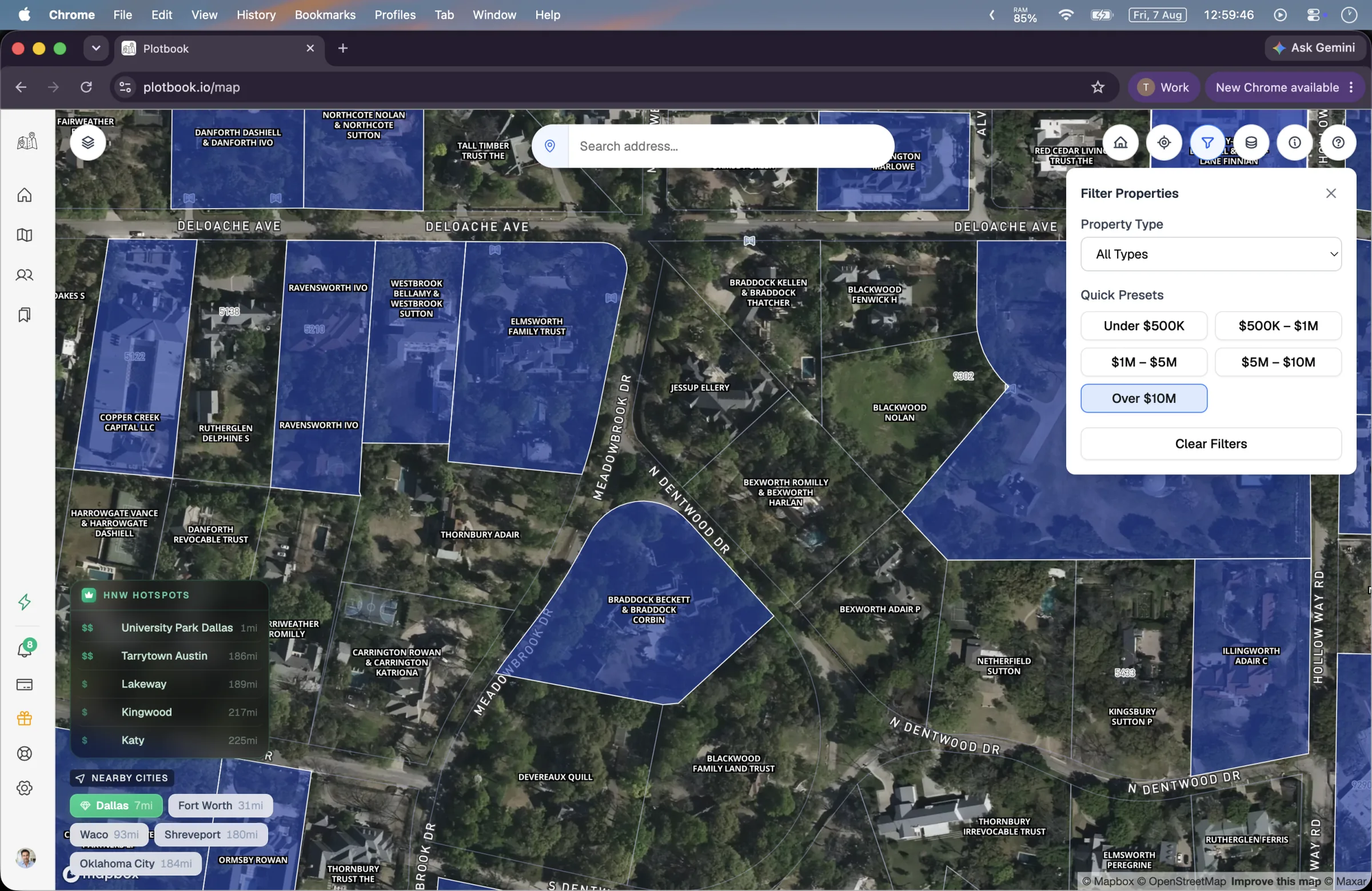
Property data
Where every parcel, owner name, and assessed value on the map comes from, how it reaches your browser, and what county records can and cannot tell you.
Read the explainer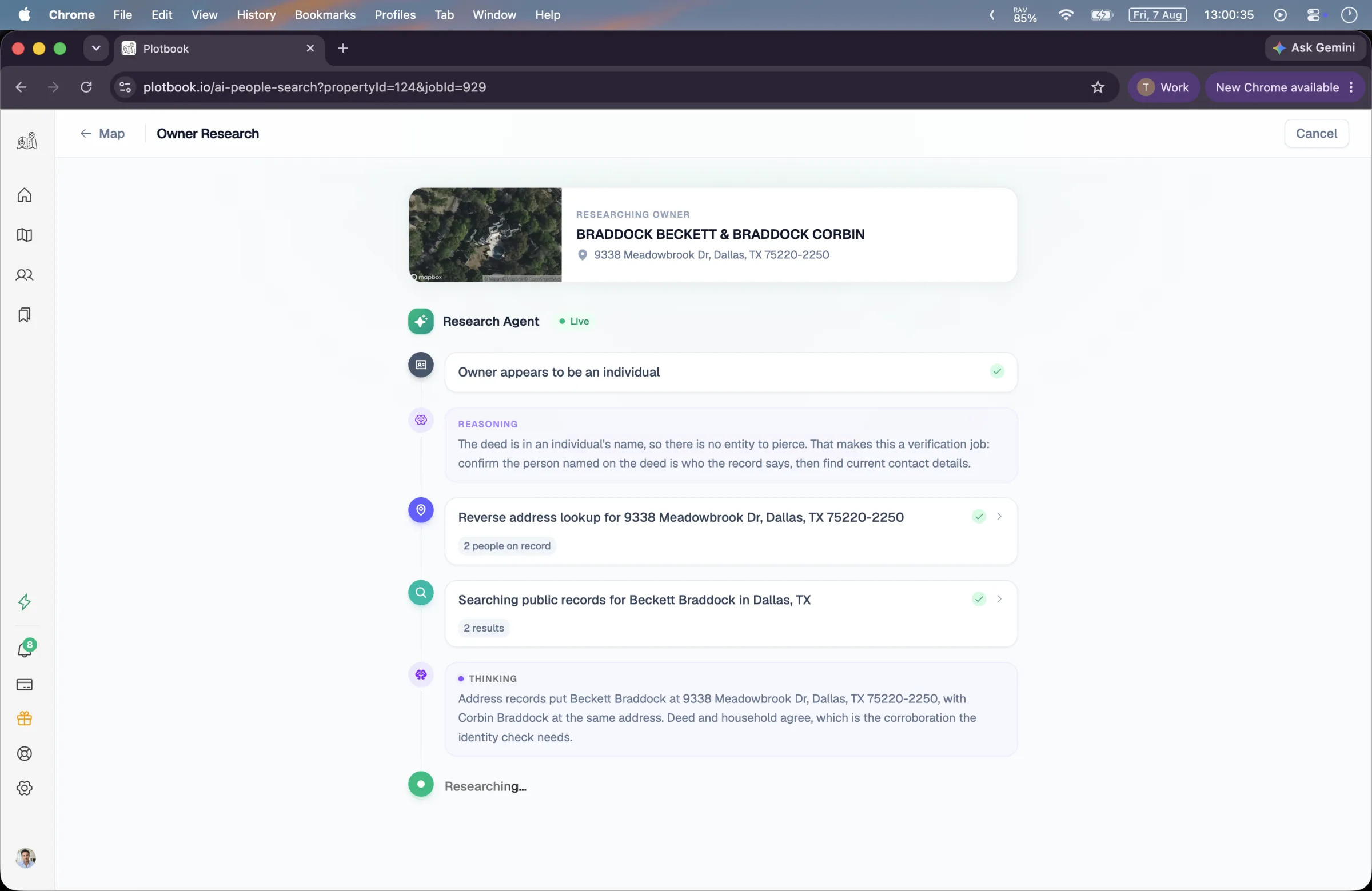
The research agent
What actually happens between clicking research on an entity-held deed and getting a named person back: the deterministic seeds, the eleven tools, the playbooks, and the honesty rules.
Read the explainer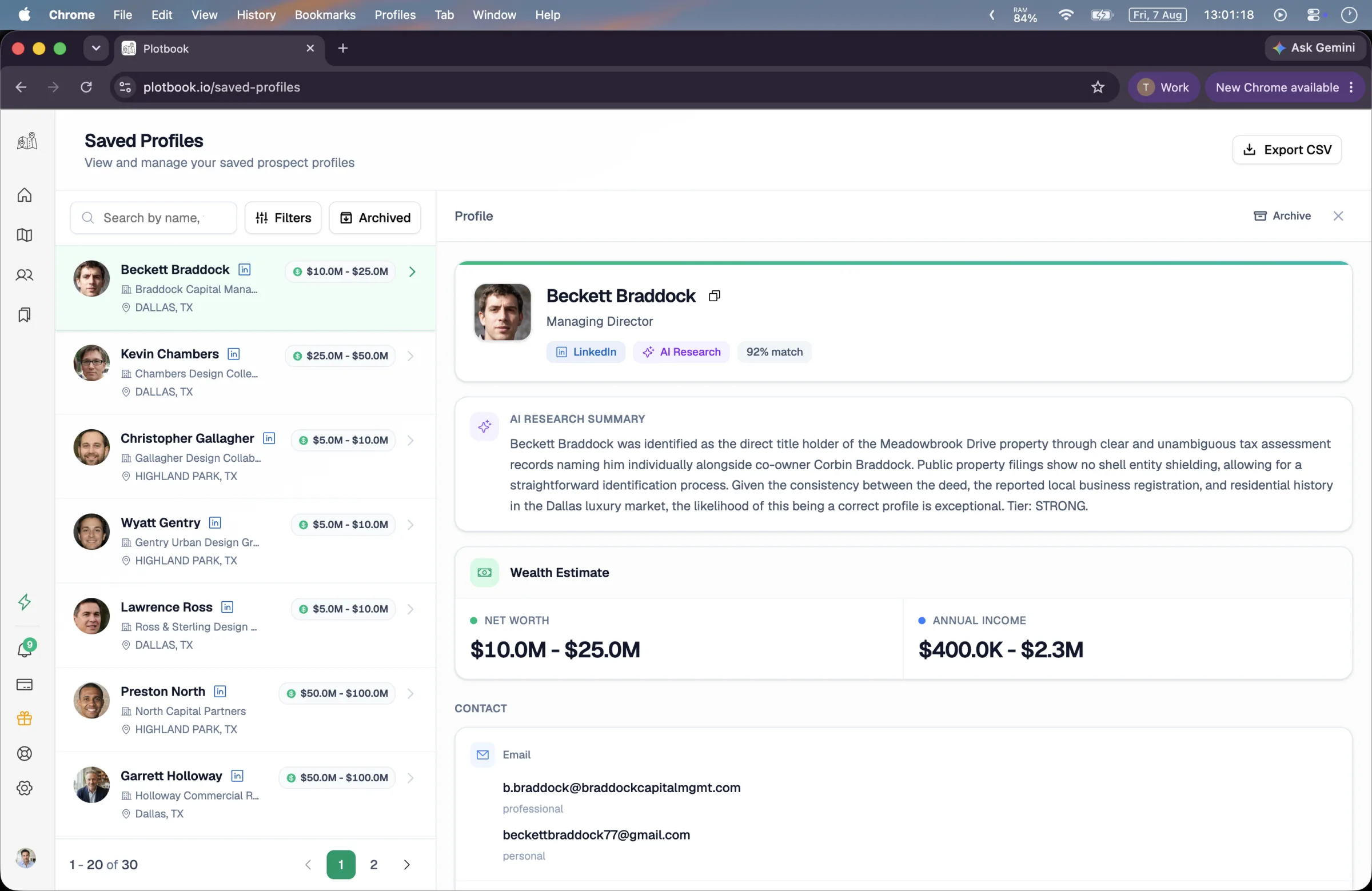
Wealth estimation
What goes into the four estimated ranges on a profile, which signals are real records and which are inference, and exactly how much weight the number deserves.
Read the explainerEnd to end
From a clerk filing a deed to a name you can call
The three explainers are stages of one chain. Read in order, they describe everything that happens between a county recording a document and a prospect sitting in your book with its evidence attached.
- 01
A county writes it down
An assessor sets a value, a recorder registers a deed. Everything downstream inherits that cadence, which is weeks after a closing rather than minutes, and it inherits the county's idea of what a property is worth.
- 02
It becomes a parcel you can read
Nationwide parcel data from Regrid, covering 150M+ parcels, streamed as vector tiles through Plotbook's own proxy, colored by assessed value in six bands, with the deed owner printed on the parcel once you are close enough to read it.
- 03
The deed gets turned into a person
A person-owned deed answers instantly from residential records. An LLC, trust, or partnership goes to the research agent, which classifies the entity, runs verified lookups first, and works registries and county records until something corroborates.
- 04
The person gets an estimate
Once a profile exists, a separate step combines the parcel, any other properties they are recorded as owning, and their career and organization into four conservative ranges: net worth, income, investible assets, and total assets.
- 05
You keep the evidence, not just the answer
Each profile carries the research summary explaining the trail, a confidence score with the number of corroborating sources, and its linked parcel, then exports as CSV with all of it intact.
Provenance
What is record, what is licensed, and what is estimated
Most of the confusion about products in this category comes from blurring these three. Here they are separated, once, so nobody has to infer which is which from a marketing page.
Parcel boundaries, the name on the deed, the county assessed value, the use type, the mailing address, business registry filings, and federal campaign-finance contributions. Public because the systems that hold them are required to be verifiable, and available to anyone willing to visit enough county websites.
Emails, phone numbers, employment and education history, and residential records including relatives and address history. These come from contact data providers under their terms of service. Plotbook does not scrape them, and they stay masked until you deliberately spend a credit to retrieve them.
Exactly one layer: the four wealth ranges. They are AI-generated from the signals above, always shown as ranges rather than a figure, and accompanied by a confidence score about the identification itself. No account, holdings, or filing data exists anywhere behind them.
See it run
All three stages, in one sitting
The full product walkthrough: the parcel map, a research run against an entity-held deed, people search, and the prospect book exporting to CSV.
Full walkthrough, 3 min. All people, contacts and wealth estimates shown are fictional demo data; property records are real public data.
Questions
Before you read the detail
Check the machinery against ground you know
Every claim on these three pages is testable in an afternoon, on a market you already understand. That is how we would want it judged.
New subscribers start with 7 days and 100 credits. We email you before the trial ends.