
Most prospecting software assumes you already have a name. Upload a CRM list, choose a profession, or buy a set of contacts, then add more data to each record.
That workflow is useful when the list is good. It does not answer a different question many advisors have: who owns the wealth in the neighborhoods I already cover?
Property-first prospecting starts with geography and works toward people. List-first prospecting starts with people and works toward qualification. The right choice depends less on the vendor than on which input you actually have.
unknown node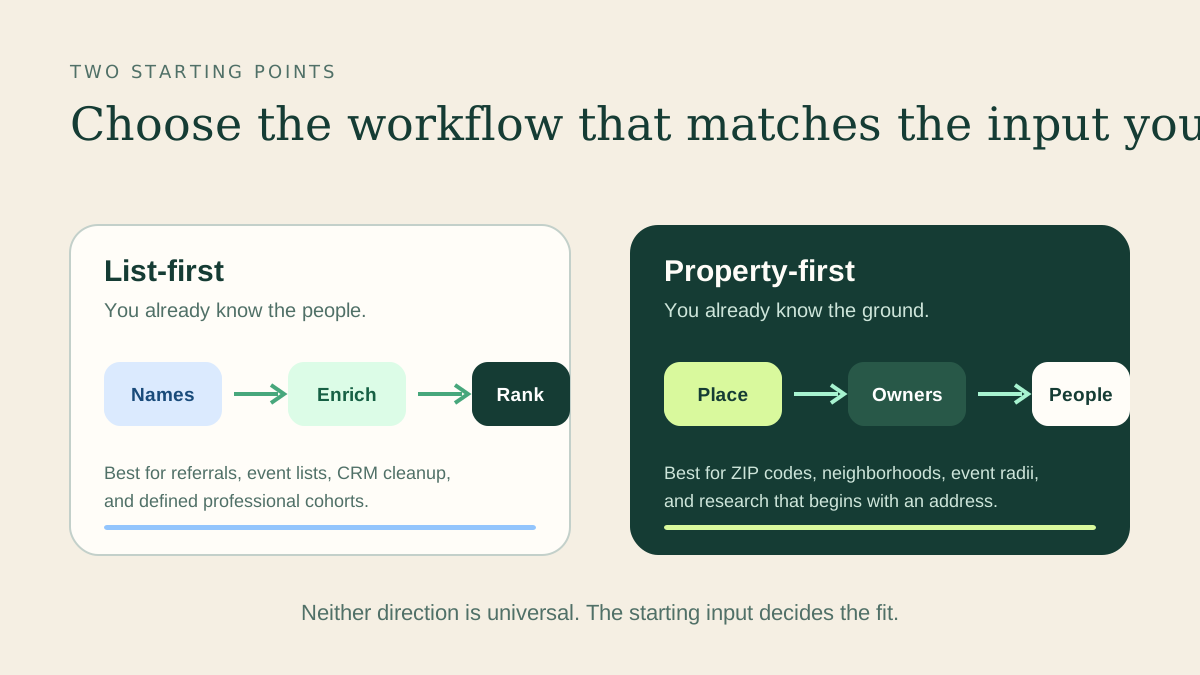
The workflows move in opposite directions. The best starting point is the input your practice can define with confidence.
What is list-first prospecting?
List-first prospecting begins with names or filter criteria. The source might be your CRM, an event list, a professional database, a purchased lead program, or a search for people with a particular title.
The typical flow is:
- Collect or buy a list of people.
- Add employer, contact, household, or wealth data.
- Score the records.
- Assign them to an outreach sequence or advisor.
This is a strong fit when you already know the people you want to evaluate. A referral list, former-client file, company alumni group, or attendee roster all fit naturally.
The weakness appears when the starting list is generic. More enrichment can make each row more detailed without making the underlying audience more relevant to your practice.
What is property-first prospecting?
Property-first prospecting begins with a place: a ZIP code, neighborhood, street, school corridor, or radius around an event.
The typical flow runs in the opposite direction:
- Define the territory you can realistically work.
- Use property value and ownership records to find relevant parcels.
- Read ownership patterns across the area.
- Resolve the people behind personal and entity-held deeds.
- Add contact, professional, and wealth context.
- Rank a short list and work it on a cadence.
This approach is useful when geography is already part of the practice. An advisor may know the clubs, charities, employers, schools, and centers of influence in three ZIP codes without knowing which households deserve deeper research.
The parcel becomes the discovery layer. It is not treated as proof of liquid wealth.
The practical differences between the two workflows
|
Question |
List-first |
Property-first |
|---|---|---|
|
Starting input |
A name, company, or uploaded list |
A place or property |
|
Best use |
Enrich people you already know |
Discover households in a territory |
|
Primary signal |
Professional and contact data |
Parcel value and ownership |
|
Natural unit of work |
Individual record |
Street, neighborhood, or ZIP code |
|
Common blind spot |
The list may be generic or exhausted |
Property value does not equal liquid wealth |
|
Entity challenge |
Often starts after a person is known |
Must resolve LLCs, trusts, and estates early |
|
Good output |
A better-qualified name list |
A ranked territory book |
Neither method is universally better. A finished target-account list does not need a map. A geographic practice does not need another national spreadsheet before it knows what is happening nearby.
The selection process should begin one level above the database. In Schwab's 2025 RIA Benchmarking Study, firms with a written ideal-client persona, client value proposition, and marketing plan reported 67% more new clients and 68% more new-client assets than other participating firms. The study covered 1,288 Schwab-custodied RIAs and was observational, self-reported, and vendor-sponsored, so it shows association rather than causation (Charles Schwab Advisor Services, July 16, 2025).
The practical lesson is still sound: define the household your practice can serve before choosing whether to find it by person, property, or both.
Choose list-first when the relationship graph is already known
List-first tools make sense when your advantage is a defined group of people. Examples include:
- Referrals from clients or centers of influence
- Executives affected by a known company event
- Participants in a retirement plan
- Alumni of a company, school, or professional group
- An existing CRM that needs current contact and employment data
In those cases, the central problem is enrichment and prioritization. You do not need to discover who belongs in the universe because the universe is already bounded.
A property layer may still add context, but it should not force the workflow to begin again.
Neither workflow replaces referrals
Referral paths remain the strongest acquisition source in major RIA studies. Schwab's 2024 benchmarking analysis attributed 67% of new clients and new-client assets among participating firms to client and center-of-influence referrals. Fidelity's 2024 Investor Insights survey found that 32% of investors who had recently hired or switched advisors cited a friend or colleague referral, the largest single discovery channel in that subset (Schwab Advisor Services, September 19, 2024; Fidelity Institutional, copyright 2025).
Both are vendor studies with specific samples. Schwab examined custodied RIAs; Fidelity surveyed 2,100 investors with at least $50,000 in household investible assets. The numbers should not be treated as universal channel benchmarks.
They do establish a useful constraint: a property or contact record is not a relationship path. A good research workflow should reveal where a client, center of influence, employer, charity, neighborhood, or event can make the first conversation less speculative.
Choose property-first when your advantage is local knowledge
Property-first tools make sense when you can name the ground you want to own but not all the people on it.
Examples include:
- A solo advisor building a book around a few ZIP codes
- A team assigning neighborhoods to junior advisors
- Pre-meeting research that begins with a referral's address
- A seminar or client event with a local attendance radius
- A property held by an LLC or trust that needs a human attached
- An advisor in the field who notices a property worth researching later
The advantage is not that a map makes outreach easy. It is that the map preserves context. You can see clusters, adjacent households, owner-occupied signals, repeated owners, and entity patterns that disappear in a flat list.
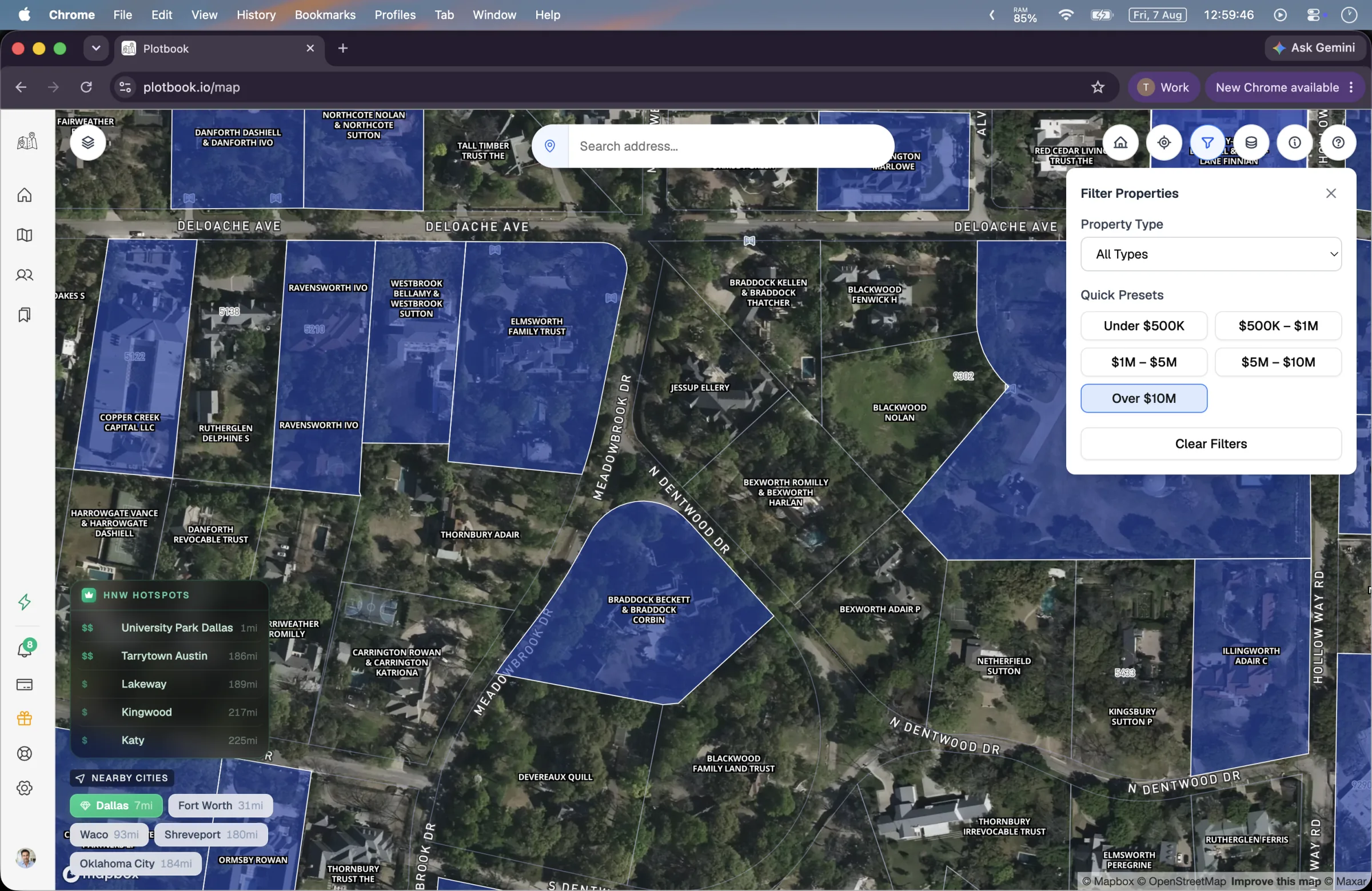
A map preserves adjacency and ownership patterns that a row-by-row contact list cannot show.
Property value should filter the queue, not decide the prospect
A high assessed value is a useful first-pass signal because it is tied to a real asset and a real place. It is not a measure of investible assets.
County assessments can lag the market. A household can have substantial home equity and limited liquidity, or modest real estate and significant business wealth. Ownership can be shared, leveraged, or held through a trust.
Use property data to decide where research begins. Use identity, professional history, business context, additional assets, and source quality to decide whether the household stays in the queue.
That second pass is what separates territory research from expensive drive-by guessing.
Population data explains why the signal is worth using and why it is unsafe to overread. In the Federal Reserve's 2022 Survey of Consumer Finances, homeowner families had median net worth of $396,200, compared with $10,400 for renters and other nonowners. Mean net worth was $1,530,900 for homeowners and $154,900 for renters and nonowners. The same survey found that about 42% of families had debt secured by a primary residence, with median debt of $155,600 among those families (Federal Reserve Board, October 2023).
The survey used 4,602 family interviews, probability sampling, a wealthy-family oversample, weighting, and multiple imputation. The association is strong, but it cannot qualify a particular homeowner or reveal investible assets.
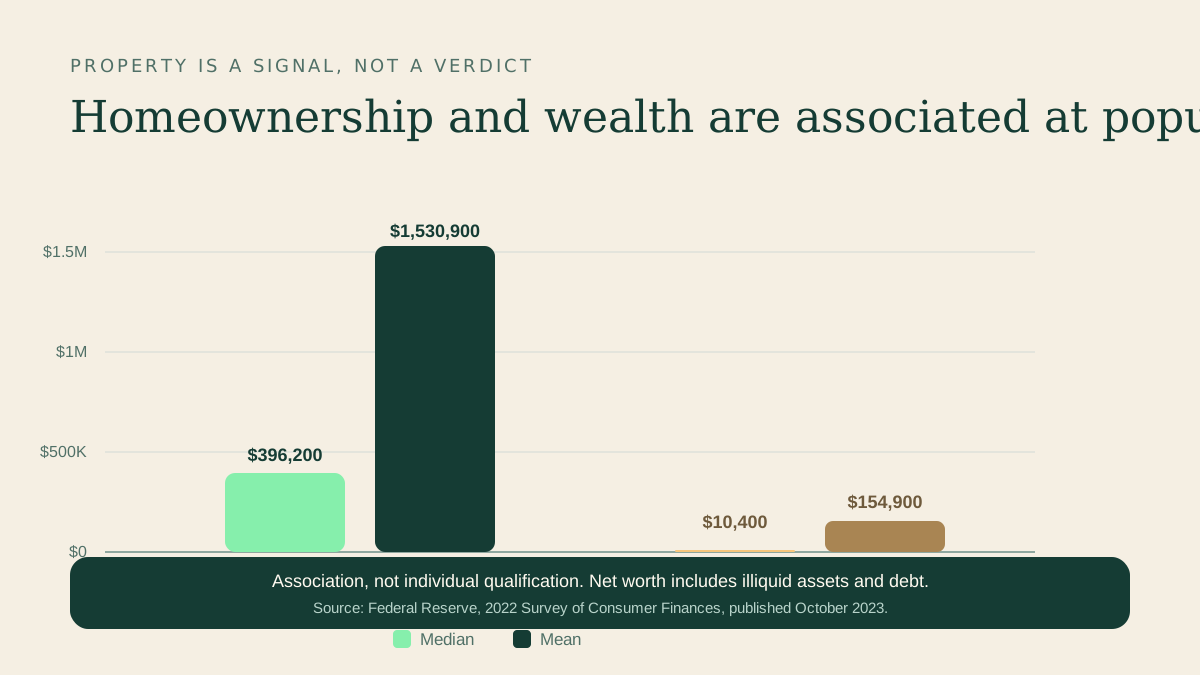
Source: Federal Reserve, 2022 Survey of Consumer Finances. Association does not establish an individual household's financial capacity.
Local conditions also move differently. FHFA reported a 2.2% national home price increase from May 2025 to May 2026, while 12-month changes across census divisions ranged from negative 0.3% in the Pacific to positive 4.5% in the Middle Atlantic (Federal Housing Finance Agency, July 28, 2026). That index measures average repeat-sale movement, not the value of a named property. Territory thresholds need local review rather than one national cutoff.
The entity problem arrives earlier in property-first research
A name-first database begins with a person. A parcel map often begins with SMITH FAMILY TRUST or OAK RIVER HOLDINGS LLC.
That changes the research work. You need to classify the legal owner, inspect entity roles, check the tax-bill mailing address, and corroborate any person before adding them to a prospect record.
Some records will resolve to a clear individual. Others will stop at the entity. A property-first system should preserve both outcomes instead of rewarding a confident guess.
For the complete workflow, read How to find the person behind an LLC-owned property.
A hybrid workflow is often the best answer
The two methods can feed each other.
Start property-first to build a short territory book. Then use list-first enrichment to add professional and contact data to the people you have verified. Before outreach, check the resulting names against your CRM and relationship network.
The reverse also works. Start with a referral or event list, attach property and household context, then look for geographic clusters. Several isolated names may turn out to sit inside a neighborhood where you already have clients and centers of influence.
The key is to keep the provenance of each field. A deed owner, residential record, professional profile, inferred wealth range, and personal note do not have the same certainty. They should not collapse into one unexplained score.
Score four dimensions separately: ideal-client fit, capacity proxy, timing or context, and relationship path. A high-value property may strengthen the capacity proxy while leaving the other three dimensions blank. Separating the scores makes the next research task obvious.
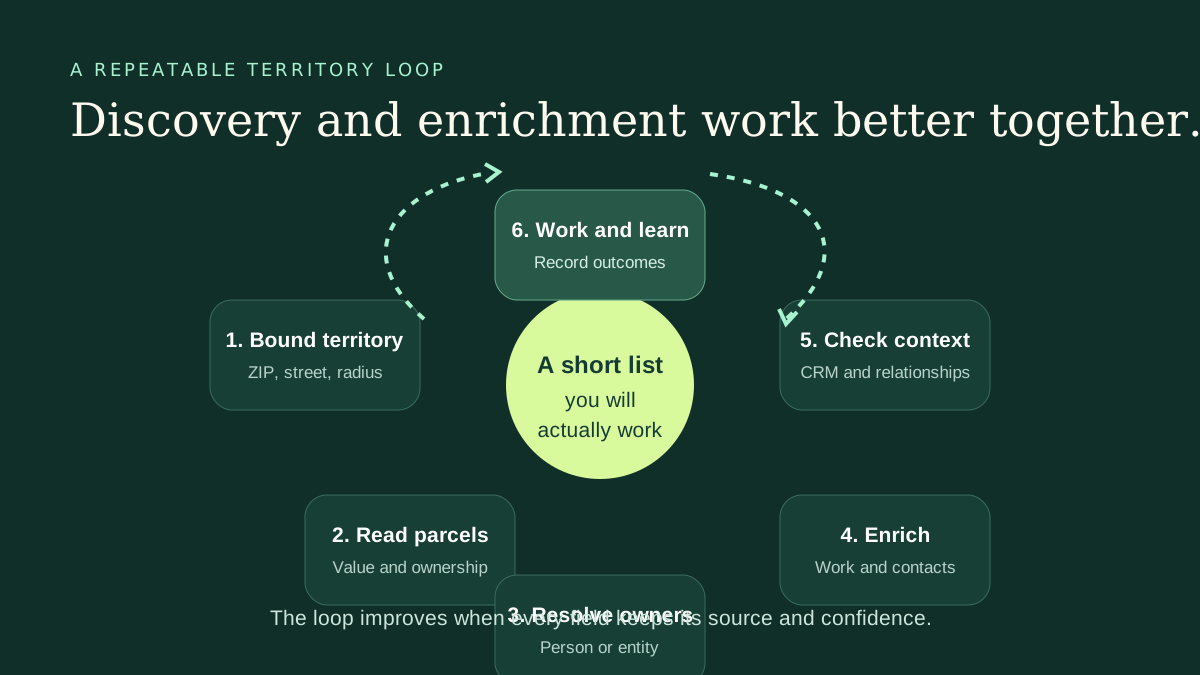
Discovery finds the universe. Enrichment and relationship context decide which records deserve attention.
A four-week property-first prospecting cadence
If you want to test the method, keep the first cycle deliberately small.
Week 1: Bound the ground
Choose one territory you understand. Set an assessed-value floor appropriate to your practice, then review the parcels above it. Cap the initial set before research begins.
Week 2: Read ownership
Separate personal owners from LLCs, trusts, estates, and institutions. Note matching and non-matching tax-bill addresses. Park entities that do not justify deeper work yet.
Week 3: Resolve and qualify
Confirm identities, add professional context, and review wealth ranges with their confidence. Build a short ranked list, not a database you will never finish.
Week 4: Work and review
Check your CRM and compliance process, choose a legitimate contact path, and record what happens. At the end of the month, review which parcel and ownership signals produced worthwhile conversations.
The result you want is not the largest list. It is a territory process you can repeat without buying the same starting point again next month.
Measure both workflows with the same scoreboard
The winning workflow is the one that produces qualified conversations and new relationships for your practice at an acceptable cost in advisor time. Track at least:
- Research hours
- Records reviewed
- Qualified opportunities
- Meetings held
- New clients
- New-client assets
- Time per qualified opportunity
- Source of the first credible relationship path
Schwab's 2026 RIA Benchmarking Study found that more than 70% of its Top Performing Firms tracked general prospect inquiries, compared with 58% of other firms. Eighty-five percent tracked inquiry sources, compared with 71%. The study covered 1,236 Schwab-custodied RIAs representing more than $2.5 trillion in assets under management. It is self-reported and observational, so tracking is a marker of management discipline, not proven cause (Charles Schwab Advisor Services, July 15, 2026).
For a fair four-week test, hold advisor hours roughly equal, define what "qualified" means before the test, and compare the two channels at the same stage. A meeting is not comparable with an exported row.
Where Plotbook fits
Plotbook's Property Wealth Map begins with nationwide US parcel data licensed from Regrid. Parcels are colored in assessed-value bands, and deed owner labels appear as you move into street-level detail.
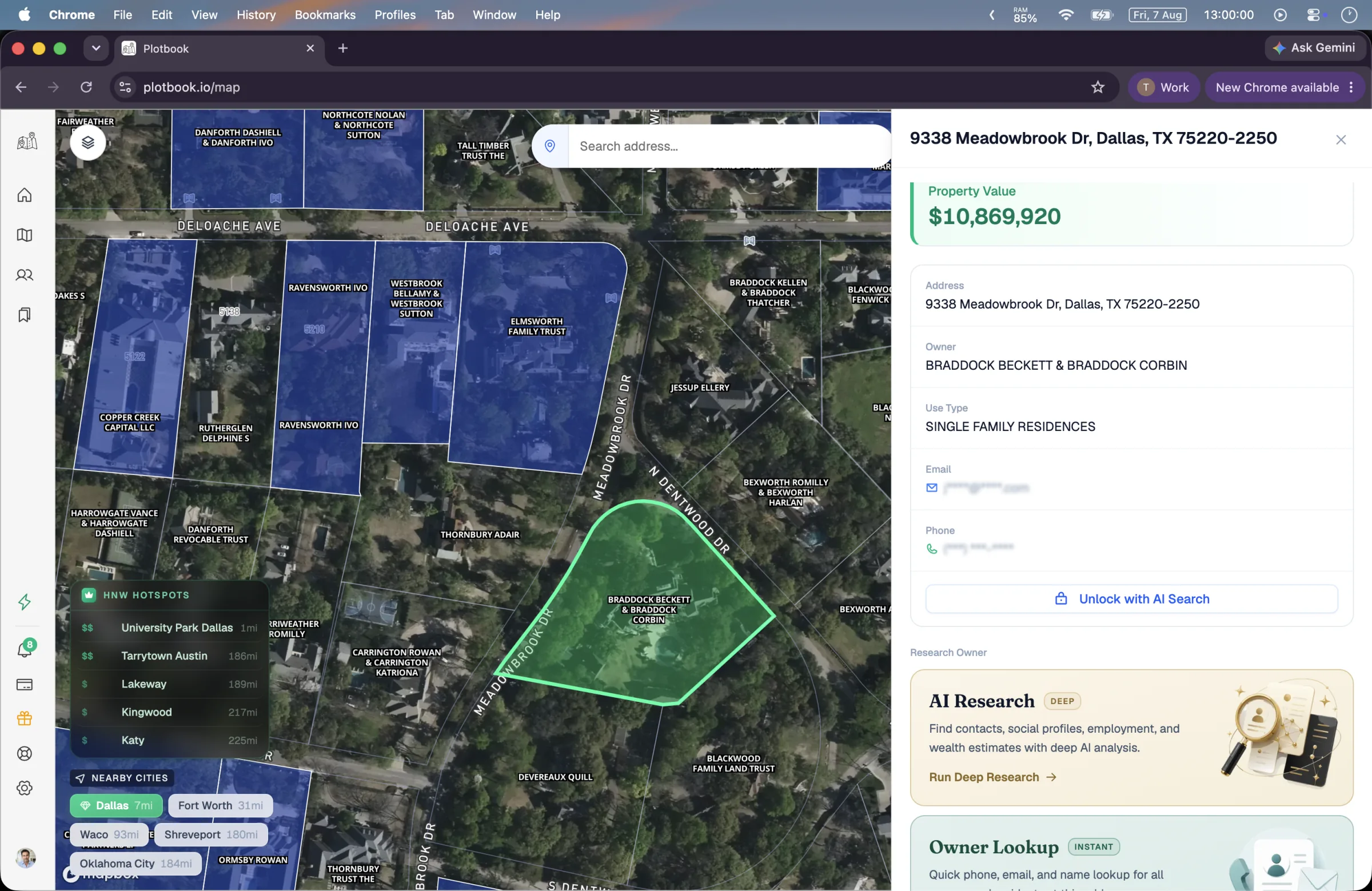
The parcel is the start of qualification. Personal deeds can use Owner Lookup; entity deeds can continue into deeper research.
Click a parcel to see the property record. If the deed names a person, Owner Lookup can return owners and residents with available contact and professional details. If the deed names an LLC, trust, partnership, or estate, AI Owner Research follows the deeper entity path.
Completed research lands in Saved Profiles with the parcel, contacts, professional history, four wealth ranges, confidence, and the research summary attached. Plotbook does not send email or dial prospects. It handles the research layer and leaves contact decisions to you and your firm's process.
If you already have a finished target list and only need batch enrichment, use a list-first tool built for that job. Plotbook is for the earlier question: who should be on the list in the first place?
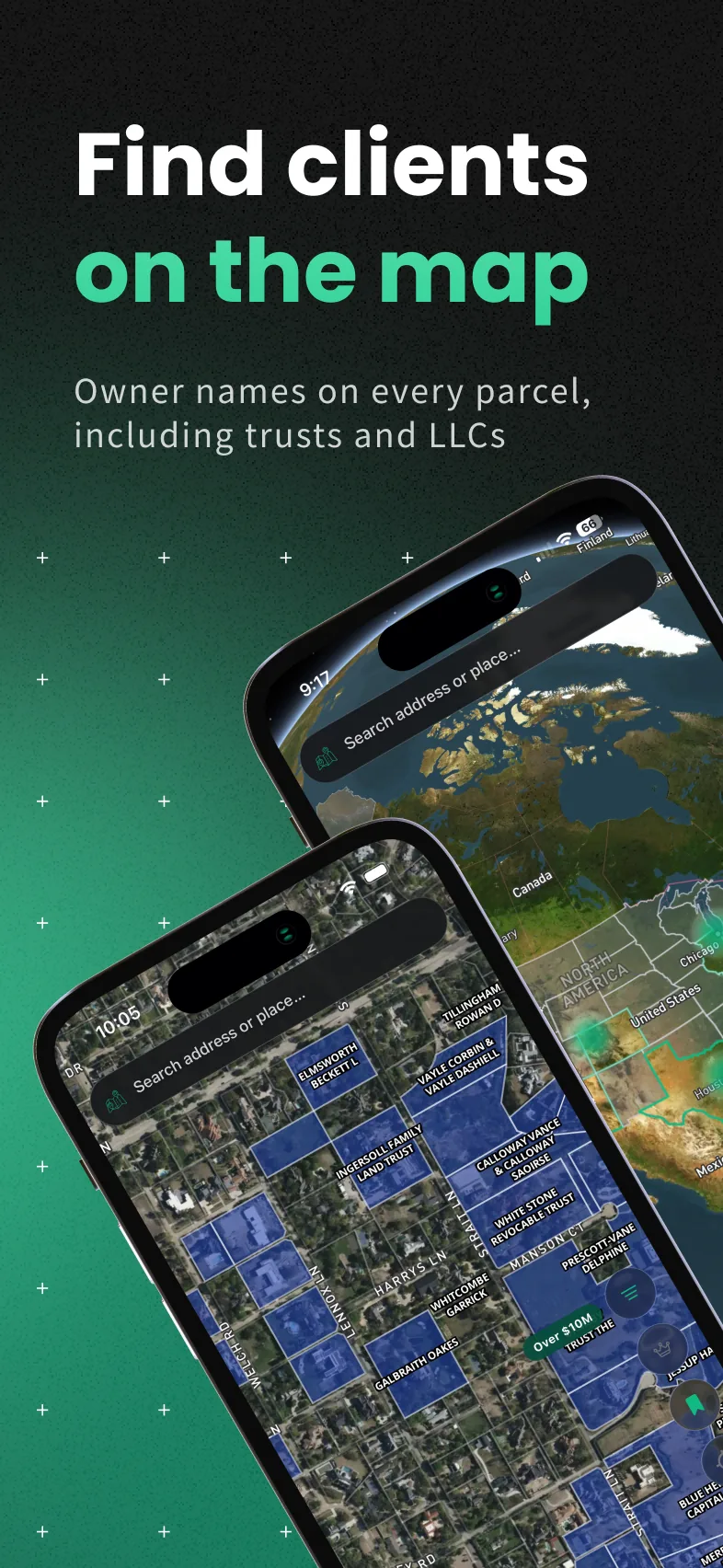
The iPhone app carries the same territory-first workflow into the field.
Test property-first prospecting on ground you know
Open the Plotbook Property Wealth Map and start with one ZIP code or neighborhood you understand. Compare the parcel and owner patterns against what you already know before expanding the territory. For a manual version of the same method, use the published guide to working a territory by assessed property value.
Frequently asked questions about financial advisor prospecting
Is property value a reliable sign of investible wealth?
It is a useful discovery signal, not proof. Property can indicate asset value and household context, but it does not reveal debt, liquidity, or the rest of the balance sheet.
Can property-first prospecting replace referrals?
No. It can help you research a territory and find households worth knowing. Referrals and centers of influence remain distinct relationship paths, and local context can make the property-first list more useful.
What if I already have a large CRM?
Start list-first. Clean and qualify the relationships you already possess. Add a property-first workflow only where geographic gaps or territory expansion justify it.
Does Plotbook automate outreach?
No. Plotbook supports discovery, owner research, contact research, saved profiles, and export. It does not send email or place calls.
Start with the input you can define
List-first and property-first prospecting solve different discovery problems. If you already know the people, enrich and qualify the list. If you know the territory, use property and ownership records to discover who belongs in the research queue. If both are true, combine them and preserve the source of every field.
The database is not the strategy. Define the ideal household, retain the relationship path, and measure each workflow through the same funnel. A four-week pilot with equal advisor time will tell you more than a million-row coverage claim.
When an entity-owned parcel enters that queue, continue with the guide to finding the person behind an LLC-owned property.